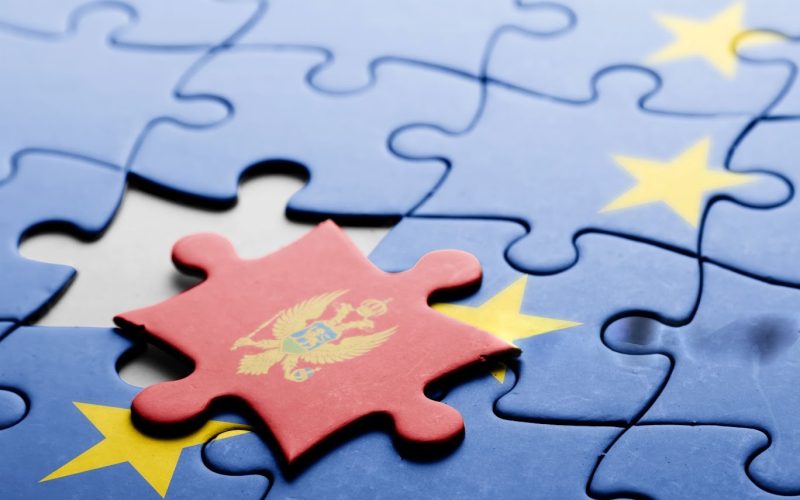
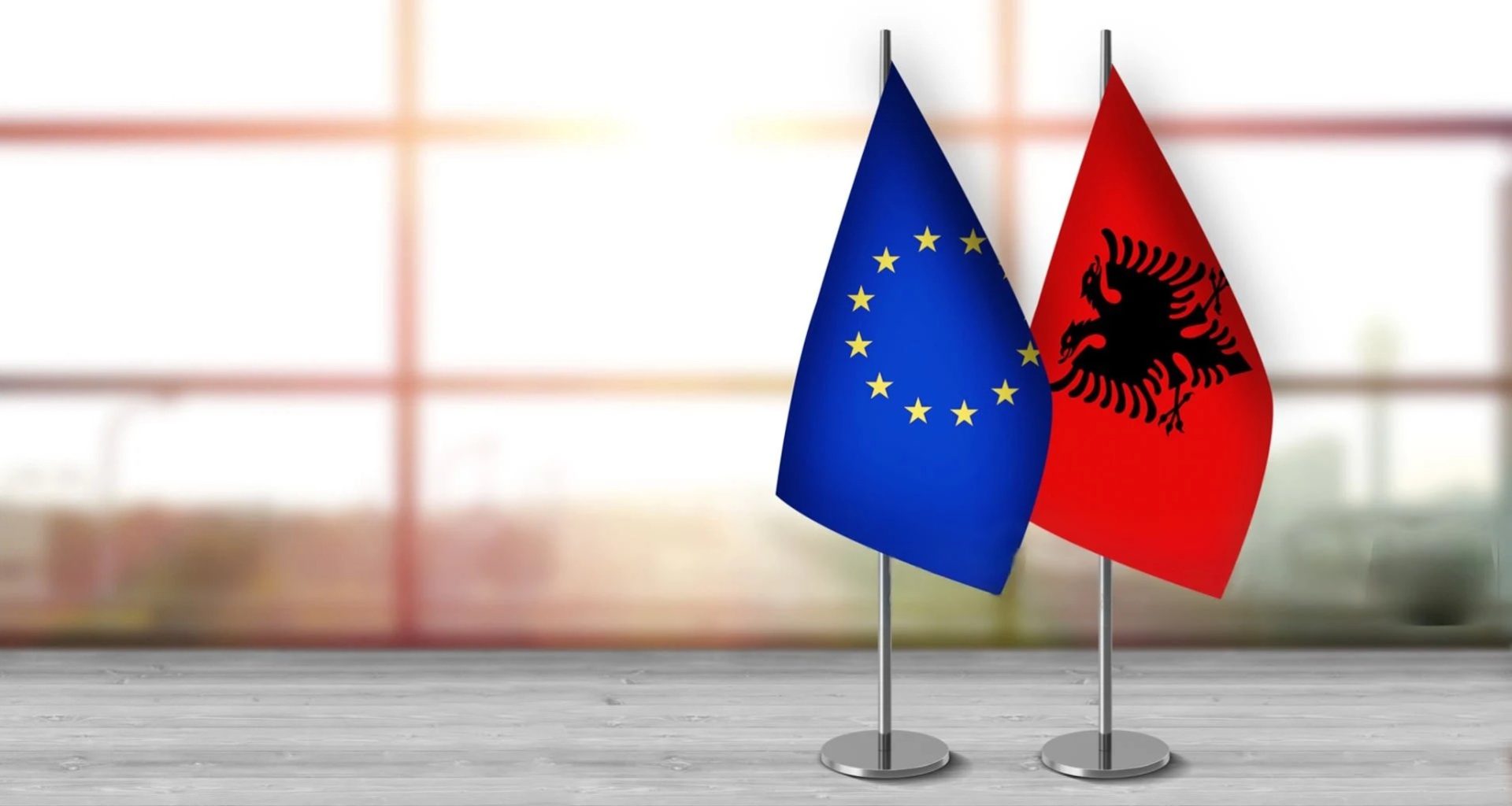
Albania entered 2026 with formal EU accession talks underway and a government publicly targeting membership by 2030. It is leaving the first half of the year instead defined by tear gas, opposition boycotts, parliamentary brawls, and a prime minister, Edi Rama, whose own party allies are beginning to break ranks publicly. The gap between Tirana’s European ambitions and its domestic political reality has rarely been wider, and that gap is now the single biggest variable in whether Albania’s accession timeline survives contact with the years ahead.
What’s Actually Happening on the Ground
The current unrest, which intensified from late 2025 onward, has multiple, overlapping triggers. Opposition protests led by former prime minister Sali Berisha and the Democratic Party have repeatedly turned violent, including a clash outside government buildings in Tirana in late January 2026 that drew thousands of demonstrators. A separate wave of demonstrations grew out of public anger over a large coastal tourism development tied to Sazan Island, a project linked to Jared Kushner’s investment interests, which critics say symbolizes a broader pattern of opaque, insider-driven development deals. And running through all of it is a deepening crisis around the Special Structure against Corruption and Organized Crime (SPAK), Albania’s most trusted institution, after parliament voted 82 to 47 on 12 March 2026 to block the arrest of an indicted former minister, Belinda Balluku.
That last point is the one Brussels has reacted to most sharply. The OSW Centre for Eastern Studies has documented that the European Commission has stated a “conducive environment” for SPAK to operate independently is essential to Albania’s credibility as a candidate. When a sitting parliament shields an official from prosecution by the country’s flagship anti-corruption body, it strikes directly at the rule-of-law criteria, Chapters 23 and 24, that the EU treats as the load-bearing wall of the entire accession process. The same OSW analysis notes that Balluku’s ministry oversaw close to €3.8 billion in infrastructure spending between 2024 and 2026, which is part of why the case has become such a flashpoint, and warns that persistent rule-of-law failures could realistically push Albania’s accession beyond 2030, not toward it.
What This Means for the Timeline
It’s worth being precise about what the protests are and aren’t doing to Albania’s EU prospects. The gathering itself has not destabilized Rama’s government in a narrow electoral sense: his parliamentary majority is intact, and the opposition’s ability to force early elections or a resignation remains limited. But EU accession isn’t just about a government’s survival; it’s about institutional credibility, and that is exactly what’s being eroded.
Even symbolic gestures aimed at reassuring Brussels have drawn skepticism. In September 2025, Rama’s government appointed “Diella,” an AI-generated virtual avatar assigned to oversee public procurement decisions, the sector most associated with corruption and clientelism in Albanian politics. In short, Diella is a digital assistant, not a human official, meant to remove ministries from tender decisions and make the process auditable and, in theory, incorruptible. Critics, including analysts writing for the European Consortium for Political Research, have called it a piece of political theater that distracts from deeper institutional reform rather than delivering it. That skepticism looks better founded given where Albania’s underlying corruption metrics actually stand: the 2025 Corruption Perceptions Index scored Albania at 39 out of 100, a three-point drop that pushed the country down 11 places to 91st out of 182 countries, its worst showing in years.
A Crack Inside the Ruling Party
There’s also a slower-burning risk worth naming: the emergence of cracks within Rama’s own Socialist Party. Elisa Spiropali, a longtime Rama ally who served as Speaker of Parliament and later as Minister for Europe and Foreign Affairs, has become the sharpest internal critic to emerge from within the governing party in years. According to the OSW analysis, she has argued that Albania’s government increasingly treats abuses of power as normal rather than exceptional, and that EU membership cannot remain “merely a political narrative” without real, observed standards behind it. When a former Speaker of Parliament and ex-Foreign Minister says that publicly, it’s a signal the ruling party’s internal consensus, the very thing that has powered Rama’s dominance for over a decade, may be fraying. A government that loses control of its own narrative on Europe is a government that will struggle to sustain the multi-year reform discipline accession actually requires.
Conclusion
None of this means Albania’s EU path is over, but it does mean the country has clearly slowed its own progress at exactly the moment consistency matters most. The EU’s enlargement framework is explicitly merit-based, and merit is measured less by rhetorical commitment to Brussels, or by symbolic gestures like an AI minister, than by whether institutions like SPAK can function without political interference. Until Tirana can show that protecting anti-corruption enforcement takes priority over protecting individual officials, its European integration will remain hostage to its own internal politics, and every cycle of unrest will hand skeptical member states one more reason to slow-walk the next chapter.
The test for Albania in the coming year isn’t whether the streets stay calm. It’s whether SPAK stays independent, whether the ruling coalition can absorb internal dissent without fracturing, and whether “merit-based” enlargement is treated by Tirana as a real standard rather than a talking point. Right now, the evidence on all three points is in the wrong direction.

Benjamin Jenkins Wise
Political Science Graduate and UNCTAD Intern