
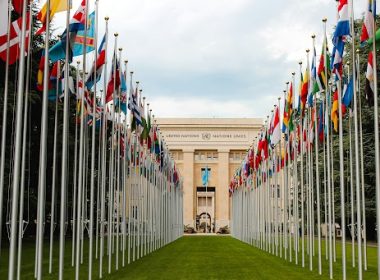


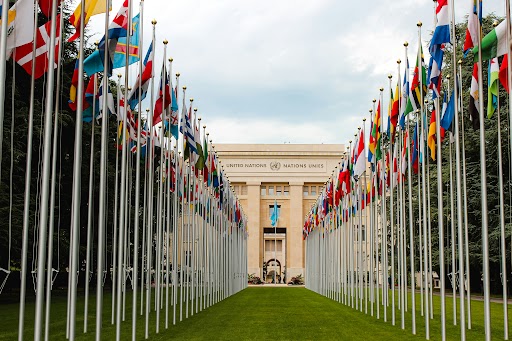
At the UN General Assembly’s 81st session this September, the Western Balkans showed up in force. Serbia, Croatia, Montenegro, and Bosnia and Herzegovina all sent representation at the highest level, weaving national priorities into debates on European security, international law, and the shifting global order. On paper, it looked like a region increasingly comfortable on the world stage: governments navigating great-power competition and projecting confidence from the UN podium even as political authority at home was becoming harder to sustain.
Then, five days after his own remarks to the General Assembly, Serbian President Aleksandar Vučić resigned.
That single fact says more about the Western Balkans in September 2026 than anything said from the UN podium. Vučić spent his UNGA address doing what he has done at nearly every major international appearance for a decade: invoking UN Security Council Resolution 1244, accusing the West of selectively applying the sovereignty principles it demands of others, and positioning Serbia as an independent actor balancing Washington, Moscow, and Beijing. It was, by most accounts, his farewell as president. He returned home and, on September 27, stepped down seven months before the end of his term after prolonged student-led protests, clearing the way to contest the October 25 parliamentary election and seek the prime minister’s chair. The contrast was striking: a leader using his final turn at the world’s most visible podium to defend Serbia’s sovereignty while domestic pressure forced him to abandon one office and take the unusual risk of seeking power through another.
Kosovo’s presence at UNGA carried a quieter irony. The delegation from Pristina arrived without an elected head of state: President Vjosa Osmani’s term expired on April 4, and the Assembly’s failure to elect a successor left parliamentary speaker Albulena Haxhiu serving as acting president. For a state whose international standing has long depended in part on demonstrating durable, functioning institutions, UNGA week exposed an uncomfortable contrast between its outward diplomatic case and unresolved constitutional succession at home.
Bosnia and Herzegovina, the region’s most structurally fragile state, arrived with the political challenge from Republika Srpska unresolved. Milorad Dodik’s removal from office and six-year political ban did not eliminate the project associated with him. His ally Siniša Karan won the ensuing snap presidential election and survived a partial rerun in February, and now serves as president of Republika Srpska ahead of Bosnia and Herzegovina’s October 2026 general elections. The Office of the High Representative says that, despite some institutional de-escalation, the RS leadership continues to challenge the Dayton framework and that Dodik’s rhetoric has returned to more explicit secessionist themes. The individual changed; the underlying confrontation did not.
None of this means regional integration is failing. If anything, it clarifies why multilateral engagement can become more valuable to governments precisely when authority at home is contested. Serbia’s dominant political figure has left the presidency to fight for the premiership under sustained protest pressure; Kosovo remains under an acting president after a failed succession process; and the leadership of Republika Srpska continues to test the limits of Bosnia and Herzegovina’s constitutional order. In that context, the UN podium, and the EU accession track alongside it, offers something increasingly useful: a stage on which governments can present themselves as stable, sovereign, forward-looking actors even while domestic politics become less predictable.
That is the deeper significance of the Western Balkans’ UNGA choreography in 2026. It is diplomacy, but it can also function as compensation for strained domestic foundations. For the region’s partners, the EU chief among them, the implication is not to dismiss the international performance but to look through it. Enlargement incentives, security guarantees, and multilateral engagement will matter most when they are tied to the institutional reforms that determine whether confidence displayed in New York is matched by resilience at home.

Benjamin Jenkins Wise
Political Science Graduate and UNCTAD Intern