

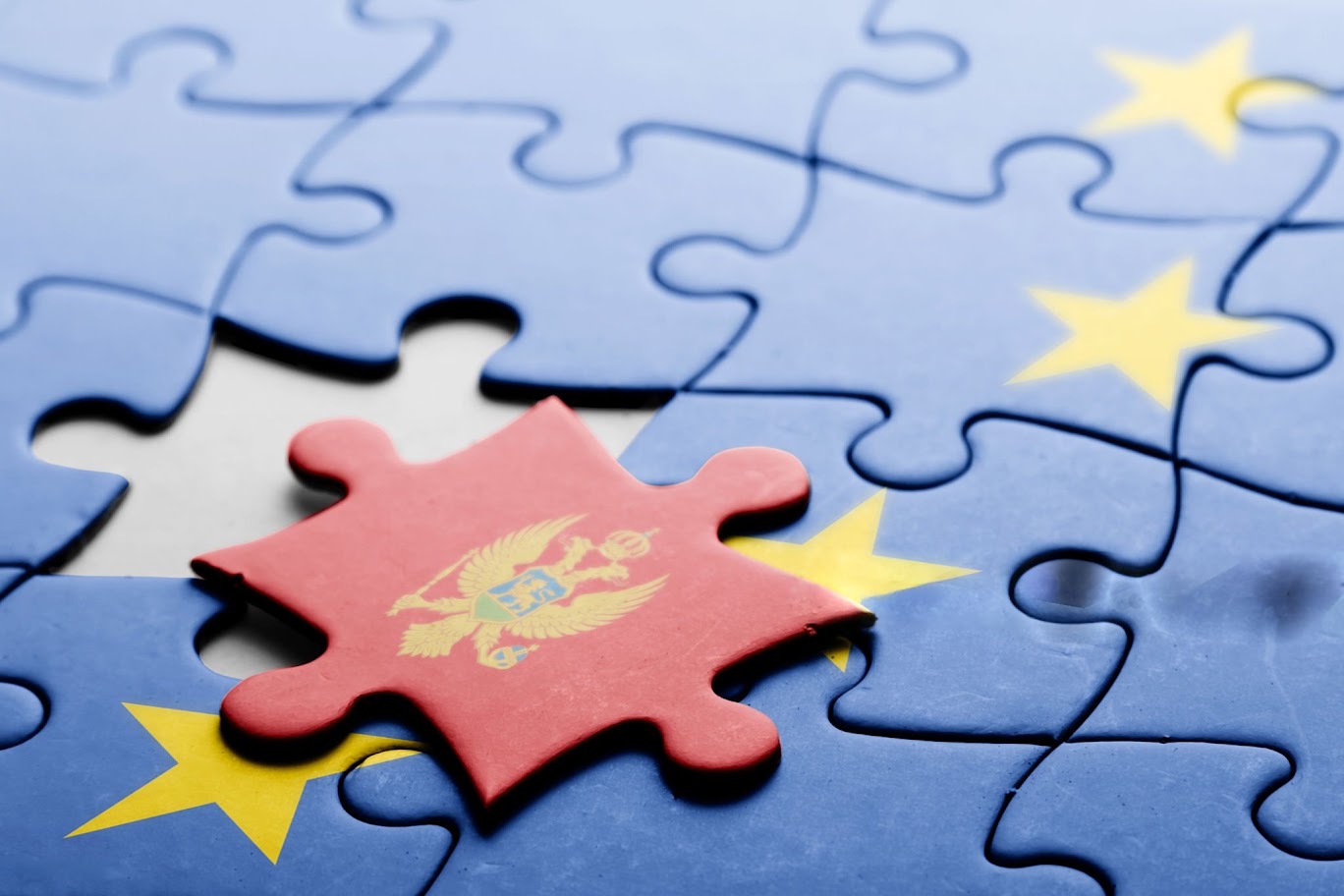
If you want to see what genuine, disciplined EU integration looks like in the Western Balkans right now, look at Montenegro. Of all the region’s candidate countries, none has moved as far, as fast, or with as much internal coherence as Podgorica. Fourteen years after opening accession talks, Montenegro has become the undeniable frontrunner of the sixth enlargement wave, and I think it deserves far more attention for that than it currently gets.
The Numbers Tell a Real Story
By mid-July 2026, Montenegro had provisionally closed 18 of the 33 negotiating chapters, with all of them opened and most of the rest sitting at or near completion. That is not a symbolic milestone. It is the product of years of unglamorous, technical reform work: rewriting judicial statutes, overhauling public procurement, tightening financial control, and aligning entire ministries with EU acquis. The closure of Chapter 32 (Financial Control) on 26 January 2026, following Chapter 5 (Public Procurement) in June 2025, matters because these are “Fundamentals Cluster” chapters, the ones the EU treats as a proxy for whether a country’s institutions can actually be trusted, not just whether its laws look good on paper.
Perhaps the clearest sign that Brussels views this as serious is the decision, on 22 April 2026, to establish a dedicated working party to begin drafting Montenegro’s actual Accession Treaty. That is not preliminary paperwork. The EU does not start drafting a treaty with a country it doesn’t expect to eventually admit. Add to that the European Commission’s €3.2 billion financial package proposal for Montenegro’s accession, adopted at the end of June 2026, and you have an EU institutional apparatus that is treating 2028 membership as a realistic planning horizon, not a rhetorical one.
Why Montenegro Has Pulled Ahead
I’d argue Montenegro’s advantage comes down to scale, consensus, and geopolitics. With a population under 700,000, it has been able to move reforms through its institutions with a speed that larger, more fractured Balkan states simply cannot match. Prime Minister Milojko Spajić’s government has also made EU accession a rare point of cross-party consensus, something that stands out sharply against the polarization seen elsewhere in the region. Public opinion backs this up too: Montenegrins consistently register some of the strongest pro-EU sentiment anywhere in the Western Balkans, which gives negotiators political cover to make difficult reforms without triggering domestic backlash.
There’s also a harder-edged, geopolitical logic at work. Montenegro has been a NATO member since 2017, and analysts at institutions like DGAP have long flagged the country’s strategic position on the Adriatic, wedged between Serbia and the coast, as a vulnerability that Russia is prepared to exploit if the EU’s enlargement promise stalls. The European Council on Foreign Relations has argued that leaving frontrunners like Montenegro waiting risks handing Russia, China, and other outside powers room to expand their footprint in the Western Balkans, so accelerating the country most ready to join isn’t just a reward for good behavior. It is treated in Brussels as a strategic move in its own right. The Socialists and Democrats group in the European Parliament has made the same case explicitly, framing Montenegro’s accession as proof that the enlargement process can still deliver, at a moment when the EU badly needs exactly that kind of proof.
The Berlin Process presidency Montenegro is chairing throughout 2026, alongside its 20th anniversary of independence, marked on 21 May 2026, has also given Podgorica a diplomatic spotlight it has used well, reinforcing to EU capitals that this is a government that wants to be taken seriously as a future member state, not just a candidate going through the motions.
The Hard Part Is Still Ahead
None of this means the path is guaranteed. Even sympathetic observers of Montenegro’s process, including analysts tracking the Fundamentals Cluster, warn that reforms in the most sensitive areas, particularly judicial independence and anti-corruption enforcement, remain uneven and vulnerable to short-term political pressure.
One challenge worth naming directly is domestic identity politics. Montenegro’s Serb minority makes up roughly a quarter of the population, and Balkan Insight has reported that beneath the EU’s optimism about a fast-tracked accession sit real fault lines, including the persistence of Serb nationalist politics within the governing coalition itself. Parties with close ties to Belgrade have periodically used their leverage over the government’s parliamentary majority to force symbolic, identity-driven fights, the 2024 Jasenovac resolution that damaged relations with Croatia being one recent example, rather than to support the technical reform agenda Brussels is actually asking for. That dynamic doesn’t show up in a chapter-closure count, but it is exactly the kind of institutional fragility that can complicate the final, most sensitive stretch of the process, particularly the rule-of-law chapters that require durable, not just temporary, political consensus.
Closing a chapter “provisionally” is also not the same as having EU member states unanimously ratify an accession treaty, which still requires every one of the 27 current member states’ national parliaments to sign off (Montenegro would become the 28th), a process with its own history of delay and geopolitical horse-trading, as North Macedonia’s decades-long ordeal with Greece and Bulgaria has shown.
Conclusion
Weighing the two sides against each other, I don’t think the remaining risks change the basic picture. Montenegro has done the hard, boring, institution-building work that enlargement is supposed to reward, and it has done so faster and more consistently than any other candidate in the region. The identity politics and ratification hurdles are real, and they are worth watching closely over the next two years, but they are the kind of friction every enlargement has faced, not evidence that Montenegro’s progress is hollow. If the EU’s enlargement policy is to mean anything as a credible, merit-based process, rather than just geopolitical signaling, Montenegro’s trajectory toward 2028 membership is the test case that should succeed. My honest read is that it will. Not because the politics are perfect, but because Montenegro has built something rarer in this region: a functioning coalition of political will, technical competence, and public support all pointed in the same direction.

Benjamin Jenkins Wise
Political Science Graduate and UNCTAD Intern