
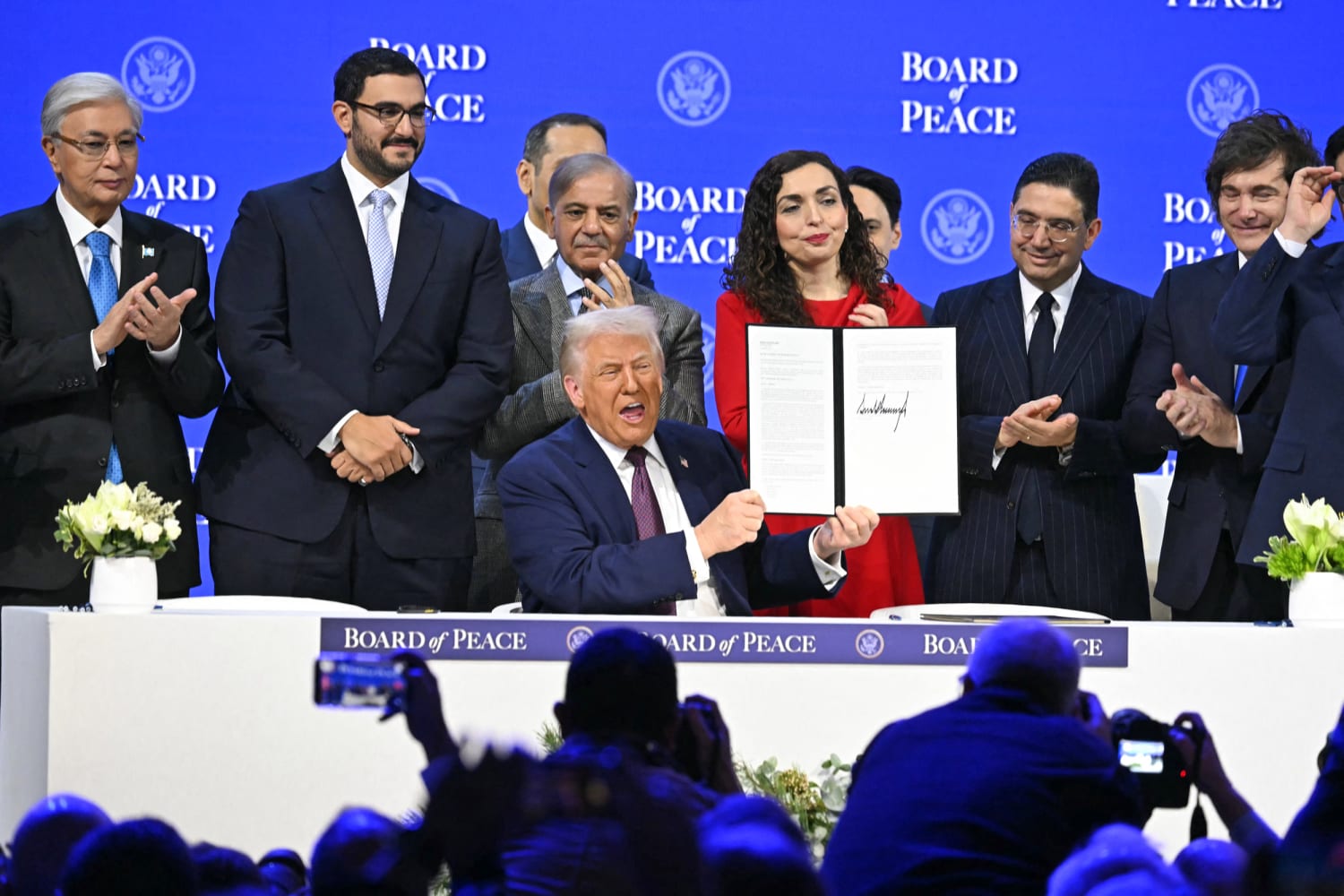
Donald Trump introduced his “Board of Peace” to the World Economic Forum in Davos during January 2026 as an innovative tool for resolving international conflicts. The initiative gained support from more than twenty countries during the following weeks when Saudi Arabia and Turkey joined as participants while Western countries showed divided responses because France, Germany and the United Kingdom among others refused to join due to concerns about potential Board mandate violations which would damage established United Nations power.
The Western Balkans currently experiences two competing forces which include the power struggle between Washington and Brussels and the region’s ongoing historical conflicts and national development paths. Albania, Bosnia and Herzegovina, Kosovo Montenegro, North Macedonia and Serbia showed different reactions to the Board of Peace initiative because some groups supported it while others showed mixed feelings (being not invited) and one completely doubted its credibility. The initiative has thrust the region into a broader debate about influence and identity: will the Balkans align more closely with a reinvented U.S. foreign policy, or will it reaffirm its anchoring in EU and UN‑based multilateralism?
The two countries of Albania and Kosovo received their invitations to join Trump’s Board of Peace which Western diplomats consider a membership of the “pro-Atlantic” alliance. The foreign ministries of both countries used the opportunity to establish stronger international relationships while establishing permanent ties with their powerful international partner.
The Serbian public and political leaders display skepticism towards American policies which they associate with its future and EU. Aleksandar Vučić the Serbian president spoke about Trump’s Davos event with scorn because he thought the project lacked real progress and he accused American policies of lacking ethical guidelines in their approach to the Balkans.
The countries like Bosnia and Herzegovina and North Macedonia maintain a stance which demonstrates their cautious approach and their non-inclusiveness. In particular, North Macedonia was not invited to participate. Montenegro remains in question too as it was not invited. The Western Balkan capitals demonstrate patchwork reactions because their current political situation struggles to establish a unified identity between Cold War tensions and the contemporary power conflicts which began after the Ukraine invasion.
The Trump administration established his Board of Peace to support diplomatic work in Gaza but Trump transformed it into a worldwide organization which he described as an alternative method to solve disputes that existed independent of the United Nations Security Council. EU officials expressed worry about this change because they believed the Board’s charter would give one person control over conflict management which would violate existing international legal standards.
Western Balkan states currently face a critical challenge which determines the future of European peace and security. EU accession and NATO integration have served as the primary goals that have guided all domestic changes and international relations decisions throughout the last 40 years. Most Western Balkan populations display higher public trust in the EU according to Gallup polls and Eurobarometer surveys except for Serbia which contains a stronger Euroskeptic sentiment that shows a regional desire for systematic rules-based integration.
The presence of the Board creates difficulties for the existing storyline. Small countries gain international recognition through their participation which enables them to reach important decision makers and demonstrate their continued significance to domestic audiences. Small countries that adopt a US-driven peace structure will create distance from NATO and UN and EU organizations which have maintained peace in Southeastern Europe for years.
European Union officials have given strict warnings against joining Trump’s peace board with the United Nations and European Union conflict resolution activities. Diplomatic officials who worked behind closed doors expressed their concern that the situation might endanger established international rules and destroy European diplomatic unity which proves their worry when they see only Hungary joining Albania through the EU member state process.
The Western Balkans needed steps to achieve their safe road because they required EU alignment and political system stability which would then secure their Euro-Atlantic integration rights. The present day has created new challenges for that story. The Board of Peace operates as an essential component which still requires these existing structures while it combines public diplomacy with geopolitical signaling to create situations which Balkan leaders must handle through intelligent planning.
The Board of Peace will function as either an effective tool or a minor reference point because Western Balkan countries will use their political skills to handle international relations while they pursue their goals for security and peace through Euro-Atlantic integration.
Arta Haxhixhemajli
Researcher at The Balkan Forum