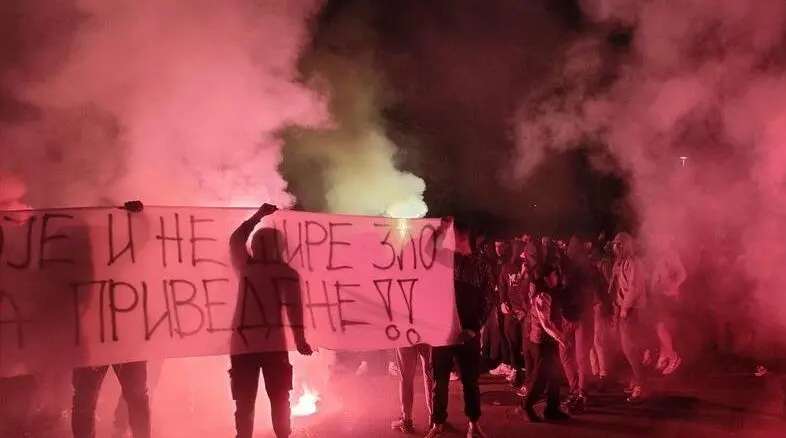


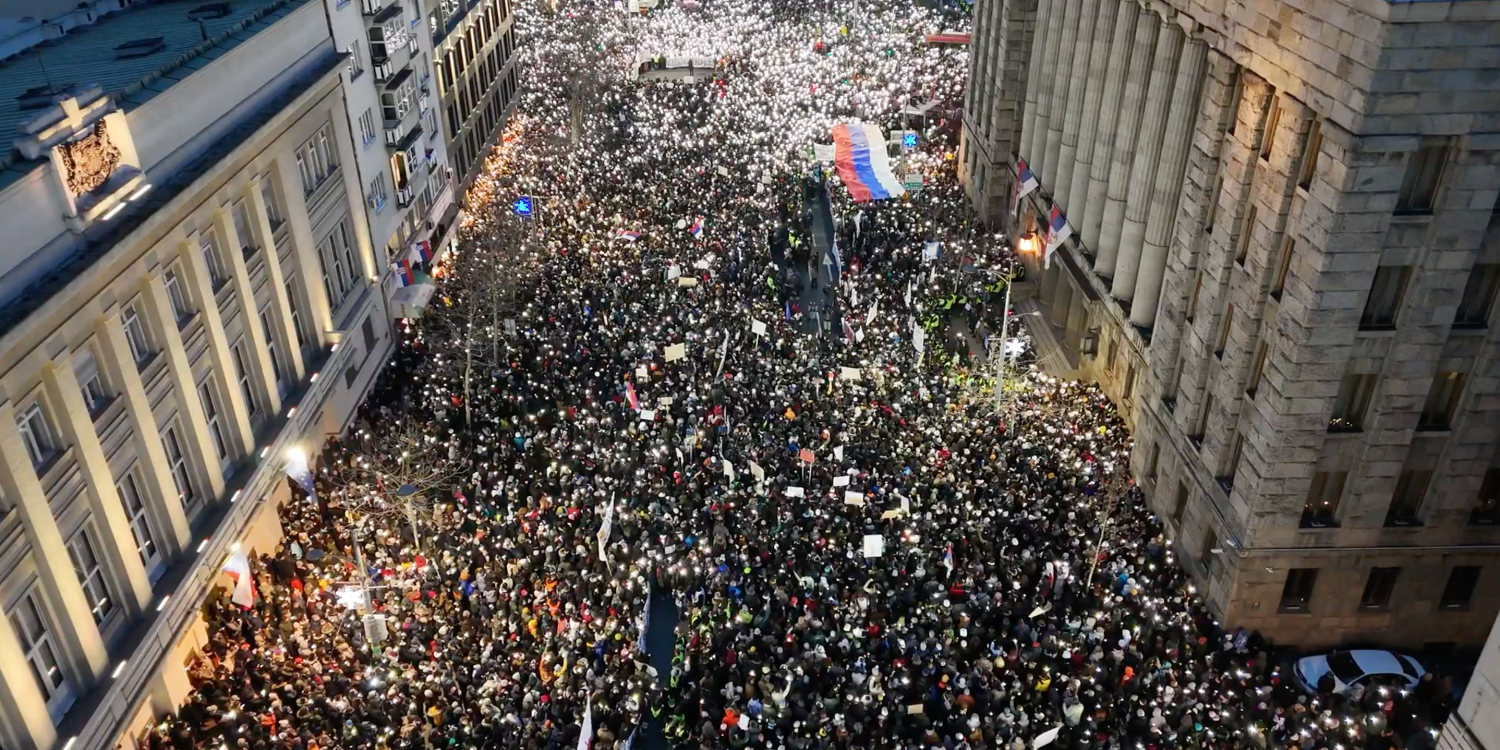
Serbia, which is still affected by civil disturbances, is one year after the roof of the Novi Sad railway station accident, which caused 16 deaths and completely lost the trust of the citizens in the government. What started as a public show of mourning has now become the longest protest in the country’s history. The demonstrations have been moving from Belgrade through Novi Sad and other cities and are still going on due to students, activists, and ordinary people who believe that the disaster has revealed a deeper problem of governance than just mismanagement. According to Al Jazeera, the disaster’s first anniversary saw the gathering of thousands of protesters who, besides wearing black and holding candles, kept silent for 16 minutes, one for each victim, and demanded a thorough investigation.
The student protest that followed the calamity has been thoroughly coalesced around the issue of the student protests, which, for their part, have emerged as the new primary means of organizing protests. Students turned the college campuses into places of public engagement by means of sitting in, chaining themselves together, and non-violently obstructing traffic. The students’ demands have remained the same over the years: making public all renovation records, keeping government staff accountable, and implementing reforms to reduce the likelihood of such mishaps. To which the authorities have reacted by taking stronger measures. Moreover, videos and reports from the area of the riot police with batons have greatly shocked the public, and especially young people who have recently been encouraged to take part in protests once more.
Public areas have been transformed into a significant battleground. The world saw the moment in Belgrade when the riot police took position right between the pro-government and anti-government demonstrators, whose anger was increasing, and that was a clear signal of the deep division within the country. In addition, the article stated that the protests are more and more like organized skirmishes, where the authorities are very carefully controlling the people surrounding them regarding movement, access, and visibility.
Despite the protests being pretty much still considered peaceful, these confrontations further illustrated the fragility of the entire situation. Moreover, connected the anniversary of the student mobilization with the movement’s transition from a reactive answer to a structure and now being a power in Serbian politics. In other words, the article argued that students, who were once ignored as childish and silly, have now established a civil network that is eternally active and can exert public influence without being related to any political party. Their impartiality has, in a way, been a double-edged sword regarding their public image; it has made them more attractive to the general public on one hand and opened them up to criticism on the other hand. The ruling party officials usually say that the movement lacks “political direction,” while the movement maintains that its position of non-partisanship is very deliberate and purposeful.
Protests have grown into a significant issue for Serbia and have agreed to provide them with second winter conditions. The massive attendance at the anniversary marches was an unambiguous sign that the public was still very angry about the issue and had not yet simmered down. In opposition, the government was set on making its power felt as evidenced by police actions, the clashes with counter-protesters, and their severe restrictions on public meetings. The ongoing presence of student and civil groups is an indication that the future will indeed be replaced by a new pattern of political participation.

Arta Haxhixhemajli
Researcher at The Balkan Forum