



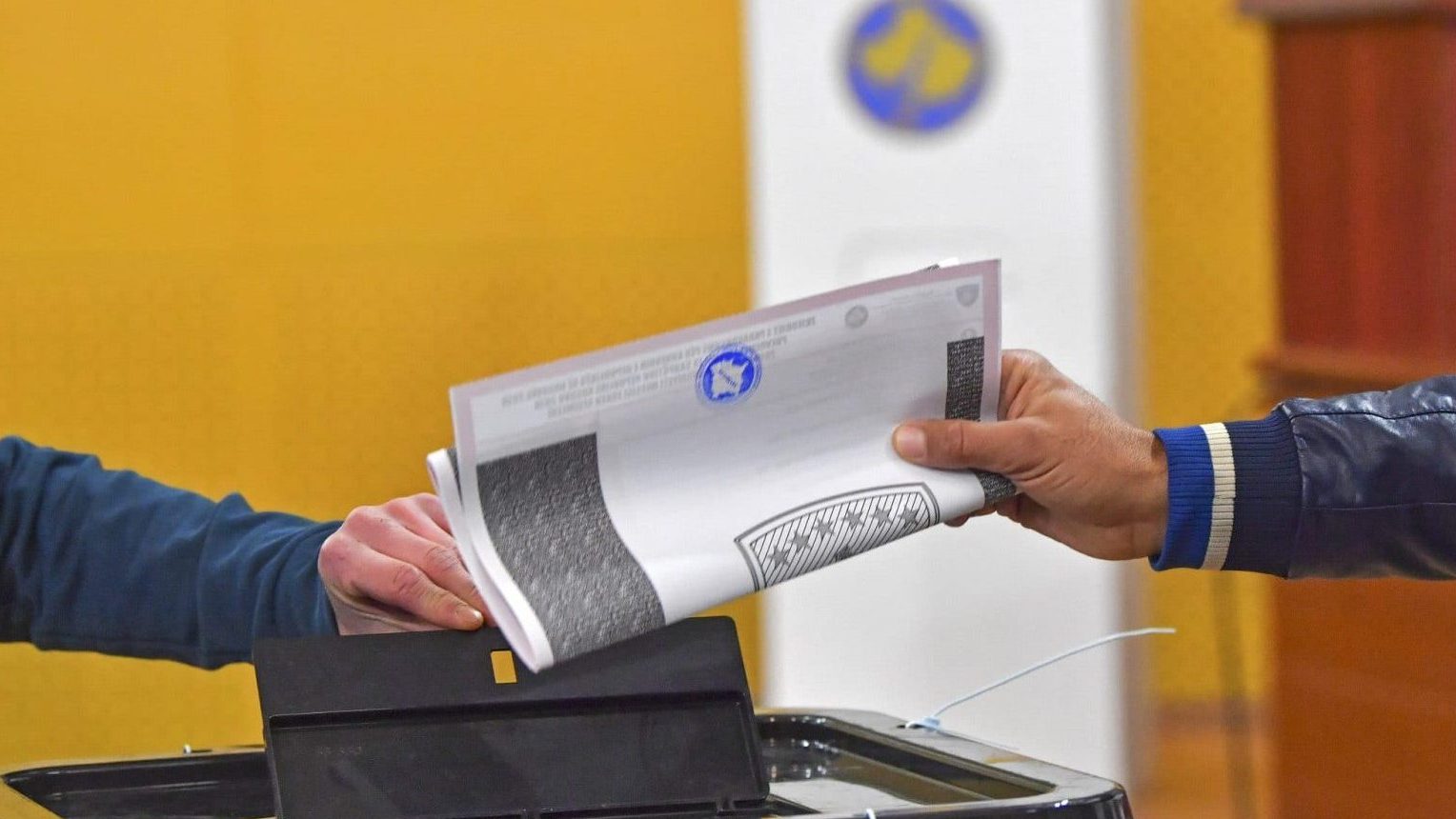
The recent election in Kosovo signified more than just the physical act of voting, formations of alliances, and distribution of seats. It was a very quiet but yet powerful rejection of one of the most persistent clichés concerning the Balkans: that democracy in this area is weak, reliant, or merely a facade. In an era in which European elections are more and more characterized by rifts, disinformation, and dwindling confidence, the vote in Kosovo was not exceptional because it was full of action but simply because it was effective.
It is such a scenario that a country usually branded with tags like “unfinished statehood,” “frozen conflict,” or “under international supervision” finds itself in. The democratic process in Kosovo was not ideal but it was active, involved, and well acknowledged. This in itself places it above many older democracies that are going through crises of legitimacy.
Voter participation was good, the election campaigns were diverse, and most importantly, the outcome was not seriously disputed. The politics were negotiated rather than the institutions challenged. In the Western Balkans, where elections are too often zero-sum battles for survival, this is a remarkable feat.
This election was particularly significant for the reason that it took place against a background of constant external pressure and internal tensions.Whereas LVV won 57 out of 100 seats (pending CEC result certification) in the parliament for the majority Albanian community. The remaining 20 seats are reserved for non-majority communities, 10 of them for the Serb parties and 10 for other communities. Still, Kosovo remains stuck in a situation of EU-mediated dialogue fatigue, complicated relations with Serbia, and increasing geopolitical interest from outside players. However, the voters did not come out as indifferent or extreme nationalists. They took part in the election.
This is in contrast to a prevailing view in the international commentary which states that unresolved sovereignty inevitably and automatically weakens the democratic capacity. On the contrary, Kosovo’s experience supports the latter assumption. Democracy will not wait for the perfect conditions. It will emerge through practice.
The election demonstrated that the political system in Kosovo, often labeled as underdeveloped, has the capacity to manage competition without descending into a crisis. The opposition parties were very active in their campaigning. The ruling party was put to the test. The institutions remained intact. The world did not end.
Thus, this very fact should make us reconsider the way in which Kosovo is talked about in the context of European political discourse. More often than not, it is not assessed according to its democratic performance but by its diplomatic status.
This is especially important now that in other places protest voting has become a method to remove democratic norms rather than to rectify them. Kosovo’s voters were more realistic than cynical. They asked for accountability, not for disorder.
That realism is indicative of a political maturity that has come from experience. The citizens of Kosovo have seen the collapse of institutions firsthand. At the same time, they have been subjected to externally driven governance. The consequence is a voter base that might criticize but is not nihilistic.
However, it should not be concluded that Kosovo is a democracy of perfection. There is still clientelism, polarization, and economic frustration. Nonetheless, a democracy is not a measure of perfection; it is a measure of resilience.
Nonetheless, Kosovo’s election did not settle the dialogue with Serbia. It did not lead to EU membership. It did not eliminate the economic frustration. But it did something that can be considered even more important: it made democracy a normal thing.
The election demonstrated that the political transformation in Kosovo takes place through voting, not through violence and demonstrations. That the leaders can gain or lose votes during the election but still the system remains legitimatized. That the people who have cast their votes are still of the opinion that participation is crucial.
Nevertheless, the phase after the elections is where the process fatigue, which is a familiar weakness, came back into play. The CEC’s decision to recount fully 10 municipalities, while in 28 municipalities, 10 percent of the polling stations will be recounted. Although it was based on law, has resulted in prolonging the time taken to declare the winner and also it has brought Kosovo to the very edge of missing the constitutional deadline for electing a new president. This is not an issue of a mere technical nature. It reveals how the application of procedural caution, when carried to extremes, can create institutional risk instead of preventing it.
Recounts might be seen as a tool and a sign of democracy in elections where the results are very close to each other. However, when they are stretched out, with no clear public communication, they are likely to create doubts rather than trust. The governance of Kosovo is now in a precarious position where they have to assert the validity of the elections without causing a constitutional crisis. Overstepping the presidential deadline would create an unpopular storyline for the authorities, namely that democratic practices in Kosovo are only good to the point where they stop being so.
If Kosovo wants its democratic approach to be recognized politically, it should make sure that mechanisms of protection will not turn into barriers that legal compliance will be in support of peace and not in the form of further delays.

Arta Haxhixhemajli
Researcher at The Balkan Forum