


February 20, 2026
Every February, the world’s political and security elite descend on Bavaria to perform what increasingly feels like a ritual of reassurance. The Munich Security Conference which took place recently followed its established pattern as speakers delivered their addresses and diplomats issued official statements which repeated the theme of unified strength. The West displayed its established pattern of behavior but the event showed a different cultural aspect which revealed that Western countries now face strategic difficulties because they fight multiple wars and experience technological changes and deal with a new multipolar system which has emerged beyond their control.
The conference’s central theme was clear: the war in Ukraine remains the defining test of Western credibility. Leaders reiterated support for Kyiv, emphasizing that fatigue must not translate into compromise. Ukrainian officials warned again that delays in military aid embolden Moscow, while European leaders stressed the need for sustained commitment. The tone of the presentation differed from previous years. The current conflict situation exists as a worldwide problem which both sides now recognize as an ongoing deadlocked conflict.
The conference revealed fundamental worries about how long the transatlantic alliance between Europe and America will stay intact. European leaders assessed various situations which would reduce American support capacity. The European defense industry needs to increase its military capabilities according to urgent requests which have arisen because American support has become less reliable. “Strategic autonomy,” which started as a disputed term, has become an essential requirement for organizations still they still cannot agree on its actual definition. The battle for control of technological resources became another main area of conflict. Current discussions demonstrate that power now belongs to those who maintain control over digital systems and their associated development networks according to artificial intelligence and cyber resilience studies. Territorial boundaries and military capabilities no longer define geopolitical competition because it now includes control over data and algorithms and supply chain systems.
Governments are competing to safeguard essential industries while they attempt to maintain a balance between security needs and the requirement for transparency which becomes harder to achieve because multiple economic ties create operational weaknesses in their defense systems. The most significant element of the Munich meeting this year became visible through its general atmosphere which showed that the Western countries are currently experiencing a defensive period. Speakers created two types of threats which they describe as external dangers and internal weaknesses which include democratic decline and disinformation and the growing distrust of the public. The liberal international order which previously existed as an established system now demands constant upkeep from active supporters.
The Western Balkans existed as a discussion topic during this period because they were present but not essential to the conversation. This is a mistake. The region remains one of Europe’s most exposed geopolitical fault lines, where unresolved disputes intersect with external influence and domestic fragility. The Western Balkans require strategic consideration because Munich must assess future threats.
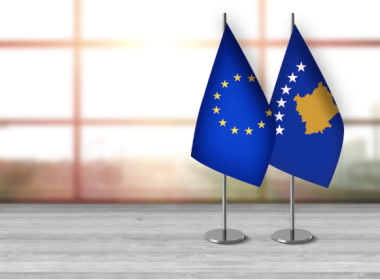
The situation in Kosovo creates urgent consequences. The leaders declared their support for Southeast European stability while Kosovo faces an unstable security situation which stems from ongoing Serbia tensions and limited international recognition and northern regional conflicts. The European Union-led dialogue process functioned as an essential component yet the parties involved showed no urgent need to address existing threats. The European Union defended its rules-based order during this year but its decision to keep a partially integrated state in strategic uncertainty creates ambiguous international messages.
The conference demonstrated that international competition now manifests itself through Balkan regional conflicts. The decision to invest in infrastructure and energy projects and digital networks serves as a geopolitical decision which extends beyond economic considerations. The region functions as a strategic location which allows different countries to test their power while demonstrating that security matters require comprehensive solutions.
Recent years provide valuable lessons which should establish Southeast European stability as a central concern. The region operates as a Western testing ground which assesses Western commitment to integration and democracy and security through ongoing involvement. The Euro-Atlantic project needs to establish concrete results which do not create an impression of choosing which priorities to follow.
The Munich event will determine whether policymakers transform their concern into effective solutions. Will Europe accelerate its process of enlargement while enhancing its security cooperation activities? Will transatlantic partners invest political capital in resolving disputes? Will the Western Balkans be treated as part of the continent’s strategic core rather than its geopolitical waiting room?
Munich has always been a forum for reflection, but reflection alone is insufficient. The conference showed that the world has entered a time of increased worldwide uncertainty because regional conflicts can develop into global crises. The Western Balkans region requires complete attention because any failure to address it results in strategic danger. Unity requires more than public statements because it must include areas where Europe has not achieved stable unified rule.

Arta Haxhixhemajli
Researcher at The Balkan Forum