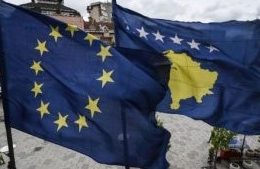



Kosovo citizens face challenges when they try to travel to Sarajevo because current visa requirements prevent them from entering the country. Bosnia and Herzegovina continues to apply these restrictions, due to its internal issues. The European Union has granted Kosovo citizens visa liberalisation which removes a travel restriction that has existed for many years and now permits them to move freely.
The situation goes beyond simple administrative postponement. The situation contains two main elements which create a challenging path for observers. A Kosovar student can travel freely to Berlin or Paris, but not to Sarajevo. A Kosovar entrepreneur can attend a trade fair in Vienna without paperwork, still must navigate uncertainty to participate in a regional conference in Bosnia. The region demonstrates a contradiction because it constantly talks about reconciliation and connectivity while it presents two elements which create complete failure.
The internal political complexity of Bosnia and Herzegovina presents an obstacle that hinders its efforts to achieve political legitimacy. The country does not formally recognise Kosovo’s independence, largely due to the opposition of political actors from Republika Srpska. Ethnic vetoes and constitutional deadlock create situations where foreign policy decisions become impossible to make in Bosnia. The explanation accurately describes the situation, yet it does not eliminate the need for someone to take responsibility. The process of visa liberalisation does not serve as a form of recognition. The system functions as a practical tool that enables international travel and business activities and strengthens personal relationships between people. Non-recognising states throughout the world establish operational ties with Kosovo, which allow them to work with the territory without needing to establish formal diplomatic relations. While Bosnia lacks it.
The decision to maintain the current visa system proves unwise because its consequences extend beyond Bosnia to affect the entire region. The Western Balkans continue to experience economic vulnerabilities while their political structure remains divided. Businesses in Bosnia and Herzegovina lose potential partners and clients from Kosovo. The universities experience a decrease in student enrollment. Civil society loses the chance to build cross-border networks. People in a region that suffers from deep-rooted historical mistrust become more isolated when movement restrictions exist because they think those restrictions protect national sovereignty.
The decision to implement this policy contradicts the regional initiatives which Bosnia supports through its active participation. The Western Balkan governments use both the Berlin Process and other connectivity frameworks to commit themselves to increasing cooperation while removing obstacles and achieving EU compliance. Freedom of movement serves as the fundamental element that enables the realization of that vision. Bosnia uses visa restrictions to Kosovo which create an opposite message that proves two things: the country wants to join EU membership but only on its specific terms and it accepts regional cooperation until that partnership becomes politically inconvenient for the country.
The assessment includes a moral aspect which requires evaluation. Kosovo had to wait longer than any other European country for its visa liberalisation. For years, its citizens were the only people in the Western Balkans unable to travel freely to the EU, despite meeting technical criteria. The eventual lifting of Schengen visas was widely seen as a restoration of dignity and fairness. Bosnia and Herzegovina needs to lift its current restrictions because they create a situation which excludes people just as Kosovo citizens experienced until recently. The evidence indicates that the Balkans continue to apply its traditional power structures which determine legitimacy. Some people believe that Bosnia’s position aligns with its non-recognition policy so they consider it to be a principled decision. The principles which exclude citizens from society provide no legitimate moral value. Visa requirements impact the daily lives of common people instead of influencing constitutional legal principles. The regulations impact artists who want to perform, family members who want to attend weddings, journalists who want to report on events, and activists who want to create regional partnerships.
The visa matter demonstrates an essential fact about the Western Balkans which explains that external forces control the region while its most serious challenges exist as native problems. Bosnia maintains this system because no foreign power forces it to do so. Domestic political conditions create the decision. People can change their decisions at any time. The EU made its decision about Kosovo mobility after years of waiting so Sarajevo has the right to change its unproductive policy.
The main issue involves determining which geographical area Bosnia and Herzegovina wants to stake its claim. The two options present themselves as a choice between managed estrangement which creates symbolic disputes and practical cooperation. Kosovo visa liberalization would not solve status issues nor eliminate political conflicts. The diplomatic conflict should not take ordinary citizens as hostages because the situation shows no resolution still between two countries.
Western Balkan countries make progress through small steps which gradually develop their systems instead of using big actions. Amending the visa regime would be one such step. The statement establishes that people need to travel because it represents an essential requirement and not a privilege. The statement establishes that Bosnia will progress towards European standards which it intends to adopt. The region needs to understand that reconciliation requires both public statements and formal meetings as well as the basic right of citizens to travel between countries.
The people of the Balkans still hope to achieve a Europe which has no borders. The citizens of Kosovo who want to enter Bosnia and Herzegovina face a border checkpoint where the borderless Europe dream still remains unfulfilled.

Arta Haxhixhemajli
Researcher at The Balkan Forum