





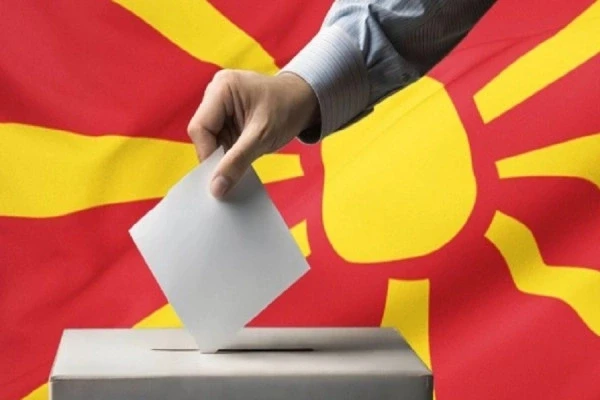
The ruling VMRO-DPMNE party won the 2025 local elections in North Macedonia by a large margin and claimed 55 out of 81 mayoral elections, including the capital city of Skopje. This result confirms the party’s strong organization and its leadership role in the upcoming national elections.
Nevertheless, the official figures are concealing a more encompassing scenario of public disillusionment and deep-rooted democratic concerns. The voting participation was one of the lowest ever recorded since the country’s independence and independent observers claimed that approximately 54,000 ballots were spoiled, this being the highest number ever recorded. The many voters who did not mark their ballots at all, crossed out the names of the candidates or used some other means of invalidating them drove home the point that they were not happy with the political options available to them.
Furthermore, the observers pointed to serious issues with institutions and processes. An initial evaluation by the NGO, CIVIL, stated that while the elections were peaceful in a formal sense, they were “characterized by deep-seated structural flaws, politicization, and institutional inertia.” Among the problems were: the use of an old voter register (deceased individuals still on it), the recurrence of technical hiccups (e.g., finger print devices not functioning), and the frequent case of ballot secrecy violation all these eventually casting doubt on the credibility of the electoral system.
It seemed that the campaigns prior to the vote made the voters even more tired and disinterested. Analysts characterized the whole thing as a cycle of ideas and an exercise in showing off. Political parties preferred to talk about identity politics, national issues, and expressing their views in a partisan manner instead of discussing local governance with concrete plans. Promises, when made, were usually minimal and included things like more bins, small-scale park improvements, or symbolic gestures rather than serious proposals to solve the root causes of problems like waste management, urban planning, infrastructure, and public services.
For instance, in Skopje there were sanitation problems due to garbage not being collected in the weeks preceding the runoff: one could see overflowing bins, littered streets, and complaints about rodents, the problems that became part of public discourse but were hardly mentioned in the campaign programs.
The general atmosphere of the election as stated by the international observers from OSCE/ODIHR and the regional Congress of Local and Regional Authorities was very much divided by ethnic and identity issues. These observers cautioned that the identity politics tended to dominate the local governance problems and pointed to the lack of media diversity, especially in rural areas, the insufficient coverage of local problems, the low participation of women, and the voters with disabilities not being adequately considered.
VMRO-DPMNE’s control of most municipalities and municipal councils in North Macedonia has given the party substantial power in terms of local budgets, appointments, and policy-making. The mix of ruling party and opposition in the local elections is interpreted by some as the possibility of the more coherent administration but by others as weakening of checks and balances, reduction of supervision, and making alternative voices unheard especially as the trust in institutions is already low.
The North Macedonian local elections of 2025 reveal a twofold truth: the domination of the ruling party in the elections and captured by nationalist narratives and ethnic mobilization on the one hand and, on the other hand, the decay of the civic engagement, the weaknesses of the electoral system, and a political atmosphere where the identity-based mobilization is more influential than the arguments for effective local governance.

Arta Haxhixhemajli
Researcher at The Balkan Forum